
DeerFlow
DeerFlow is an open-source super agent harness for long-running research, coding, creation, and multi-step automation with skills, memory, tools, and sandboxes.
Quick verdict: DeerFlow is an open-source super agent harness for long-running work such as research, coding, file creation, and multi-step automation. It combines sub-agents, skills, memory, tools, and isolated sandboxes behind a web workspace and terminal interface. It is a strong option for technical teams that want an inspectable, self-hosted agent platform, but it expects you to manage model credentials, infrastructure, security, and operational costs.
ByteDance describes DeerFlow as “Deep Exploration and Efficient Research Flow.” Version 2.0 is a ground-up rewrite that expands the original deep-research project into a broader agent harness. The current repository is active, the code is available under the MIT license, and the project supports hosted or compatible models rather than tying the workflow to one provider.
What is DeerFlow?
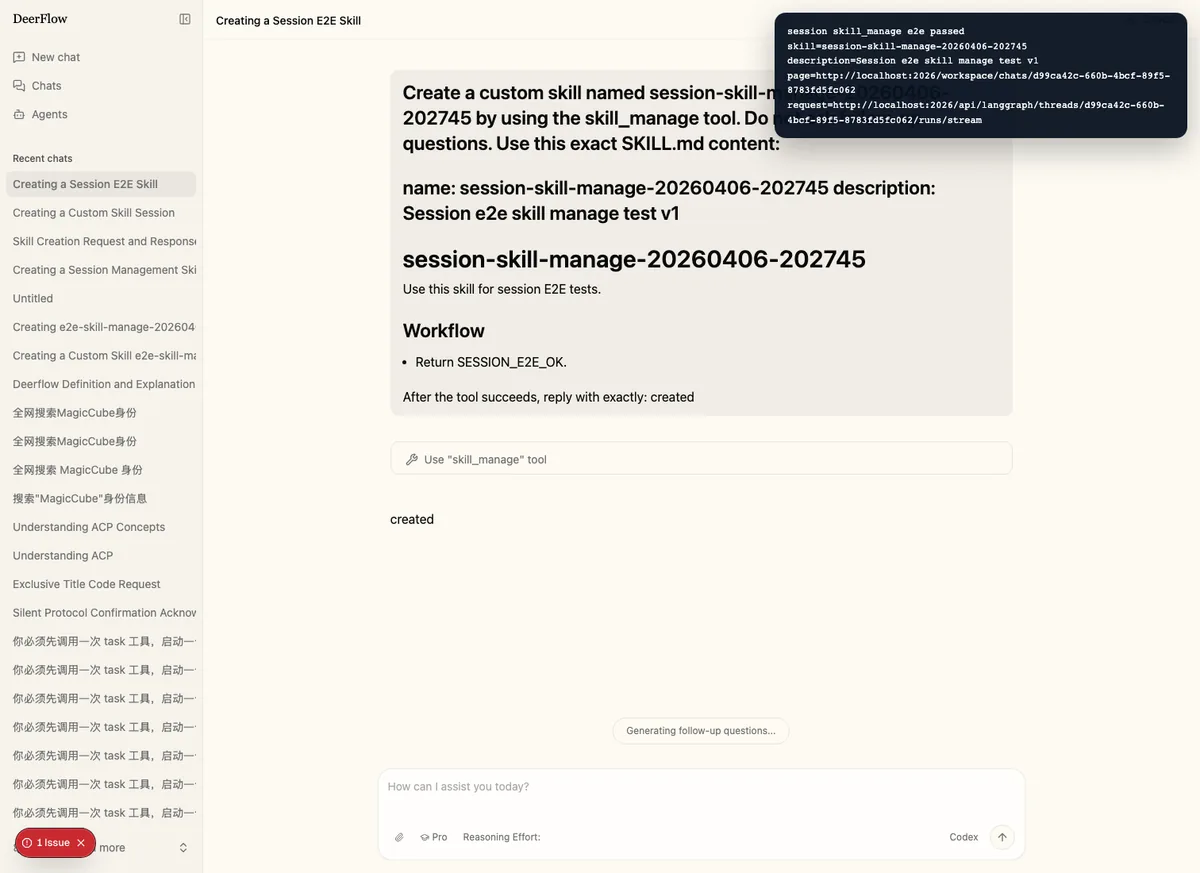
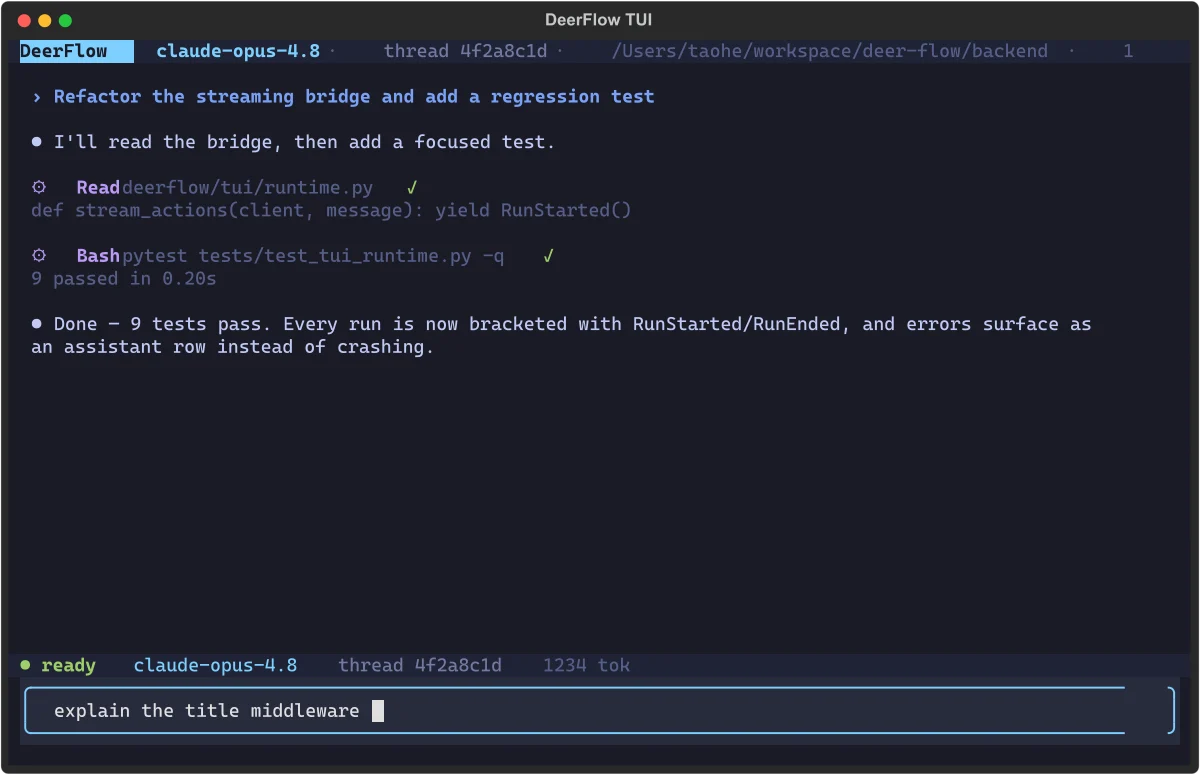
DeerFlow is a self-hosted workspace for assigning goals to an AI agent and letting it coordinate longer tasks. The lead agent can delegate to sub-agents, use reusable skills, call external tools through MCP, work inside a sandbox, compact context, and store long-term memory. Its web interface keeps chats, agents, artifacts, and settings together, while the optional terminal workbench offers a keyboard-friendly path for developers.
Main features
- Long-horizon agent runs: break a broad goal into research, coding, analysis, and content tasks that may take minutes or hours.
- Sub-agent orchestration: delegate focused work while the lead agent coordinates progress and results.
- Skills and MCP tools: extend behavior with reusable instructions and Model Context Protocol servers.
- Sandboxed execution: choose local, Docker, Kubernetes-backed, or supported remote sandbox environments.
- Memory and context controls: retain useful knowledge across sessions and manually compact long conversations when needed.
- Multiple model providers: configure OpenAI-compatible APIs, supported provider integrations, vLLM endpoints, or CLI-backed providers.
- Web and terminal workspaces: use the browser UI for general work or the TUI for a focused developer workflow.
- Messaging channels and scheduled tasks: connect supported chat platforms and run recurring jobs when your deployment is configured for them.
Product characteristics
DeerFlow feels more like an agent operating environment than a single-purpose chatbot. The useful part is the combination: a task can move between conversation, tool use, code execution, files, memory, and specialist agents without forcing you to stitch together a separate interface for every step. The repository also includes configuration and diagnostic commands, so setup problems are easier to inspect than in a black-box hosted service.
That flexibility comes with real operational responsibility. You decide which models can see your data, which tools are enabled, where files are stored, and how sandboxes are isolated. The official security guidance warns against careless public deployment. Treat authentication, network exposure, secrets, tool permissions, and sandbox mode as design decisions rather than settings to revisit after launch.
How to install and get started
The project recommends Docker for the smoothest setup. For a local evaluation, the documentation suggests starting around 4 vCPUs, 8 GB of RAM, and 20 GB of free SSD space; heavier shared deployments need more. Local development currently expects Python 3.12 or newer and Node.js 22 or newer.
git clone https://github.com/bytedance/deer-flow.git
cd deer-flow
make setup
make doctor
make docker-init
make docker-start
make setup launches the configuration wizard for your LLM provider, optional web search, and execution permissions. Add API keys to the generated environment file, then use make doctor to catch missing prerequisites. The Docker development service is available at http://localhost:2026 by default. If you prefer a local developer process, follow the repository’s platform-specific instructions and run make dev after configuration.
Start with a low-risk task that creates disposable output, then review the tool calls and files it produces. Keep bash access and file-writing permissions narrow until you understand the workflow. For persistent use, configure durable storage, authentication, monitoring, backups, and an isolated sandbox before inviting other users.
Best use cases
DeerFlow is well suited to deep research with sourced deliverables, multi-file coding tasks, internal knowledge work, report generation, and repeatable agent workflows that need tools or sandboxes. It is also useful as a reference architecture for teams evaluating sub-agent coordination, long-term memory, MCP integrations, and artifact delivery in one system.
It is less attractive when you need a zero-maintenance consumer assistant, guaranteed support, or predictable per-seat pricing. Small one-shot prompts do not benefit much from the added infrastructure. Teams without someone responsible for security and upgrades may get better results from a managed product, even if the hosted option offers less control.
Pricing and license
DeerFlow’s source code is free to download and modify under the MIT License. There is no required DeerFlow subscription for self-hosting. Your actual cost depends on model API usage, search or crawling services, servers, sandbox compute, databases, storage, monitoring, and maintenance time. Some connected models, data services, and third-party tools have separate terms, so review those licenses and prices before using the stack commercially.
My take
DeerFlow is one of the more complete open-source attempts to turn agent concepts into a usable workspace. The web UI, TUI, skills, memory, sub-agents, sandboxes, and messaging integrations cover much of what a serious agent deployment eventually needs. Active development and a clear MIT license make it easier to evaluate than a project built mainly around a launch demo.
I would use it first for one valuable but noncritical workflow and measure completion quality, model cost, failure recovery, and operator time. If that pilot works, DeerFlow can become a flexible foundation for longer AI tasks. If your team wants instant setup and someone else to own reliability, its self-hosted power will probably feel like overhead.