
OpenCodeReview
OpenCodeReview is an open-source AI code-review CLI that combines deterministic review pipelines with an LLM agent for precise, repository-aware feedback.
Quick verdict: OpenCodeReview is a focused AI code-review tool for developers who want useful, line-level feedback without handing the whole job to a general-purpose coding agent. It combines a predictable review pipeline with an LLM agent, which is a sensible way to keep reviews thorough while still letting the model investigate context.
The project started as Alibaba’s internal AI review assistant and is now available as an Apache-2.0 open-source CLI. You bring the model connection, run it against a Git diff or full files, and receive structured comments that are meant to point to the right lines rather than vague observations about the repository.
What is OpenCodeReview?
OpenCodeReview reads changed files from Git, groups related files, applies relevant review rules, and gives an LLM agent access to the surrounding code when it needs more context. It can review working-tree changes, a branch range, or a single commit. The separate ocr scan command can also inspect complete files or directories when there is no useful diff.
This is not another code-completion interface. Its job is narrower: catch defects, security problems, and maintainability issues before a change is merged. That focus makes it especially interesting for teams that already use pull requests and want an automated first pass before a human reviewer steps in.

Main features
- Diff and full-file review: inspect local changes, branches, commits, an entire repository, or selected paths.
- Repository-aware agent: the reviewer can read full files, search the codebase, and inspect related changes instead of judging an isolated snippet.
- Deterministic coverage: file selection, bundling, rule matching, and comment positioning are handled by engineering logic rather than left entirely to the model.
- Line-level comments: feedback is structured and tied to precise locations, which makes it easier to act on in a real review.
- Custom review rules: teams can target rules by path and file characteristics, including checks for issues such as SQL injection, XSS, null handling, and thread safety.
- Flexible model access: configure a supported provider or a compatible custom endpoint, or use delegation mode with an existing coding agent.
- Workflow integrations: the official documentation covers GitHub Actions, GitLab CI, Gerrit, GitFlic, MCP, and several coding-agent integrations.
What makes it different?
The hybrid design is the important part. A general coding agent may decide which files to inspect and how much effort to spend on each one, so coverage can vary between runs. OpenCodeReview puts hard constraints around those mechanical steps, then lets the agent concentrate on reasoning and retrieving context. In practice, that should make results more repeatable and reduce comments that point to the wrong place.
Alibaba’s published benchmark reports higher precision and F1 than a general-purpose agent using the same underlying model, while using substantially fewer tokens. I would treat that as useful project-supplied evidence rather than a universal guarantee: performance will still depend on the language, repository, rules, model, and kind of defect you are testing.
How to install and use OpenCodeReview
You need Git 2.41 or newer and Node.js/npm for the simplest installation route. Install the CLI globally:
npm install -g @alibaba-group/open-code-reviewNext, use the interactive configuration to select a provider and model. The setup tests the connection, so configuration mistakes are easier to catch before the first review:
ocr config provider
ocr config model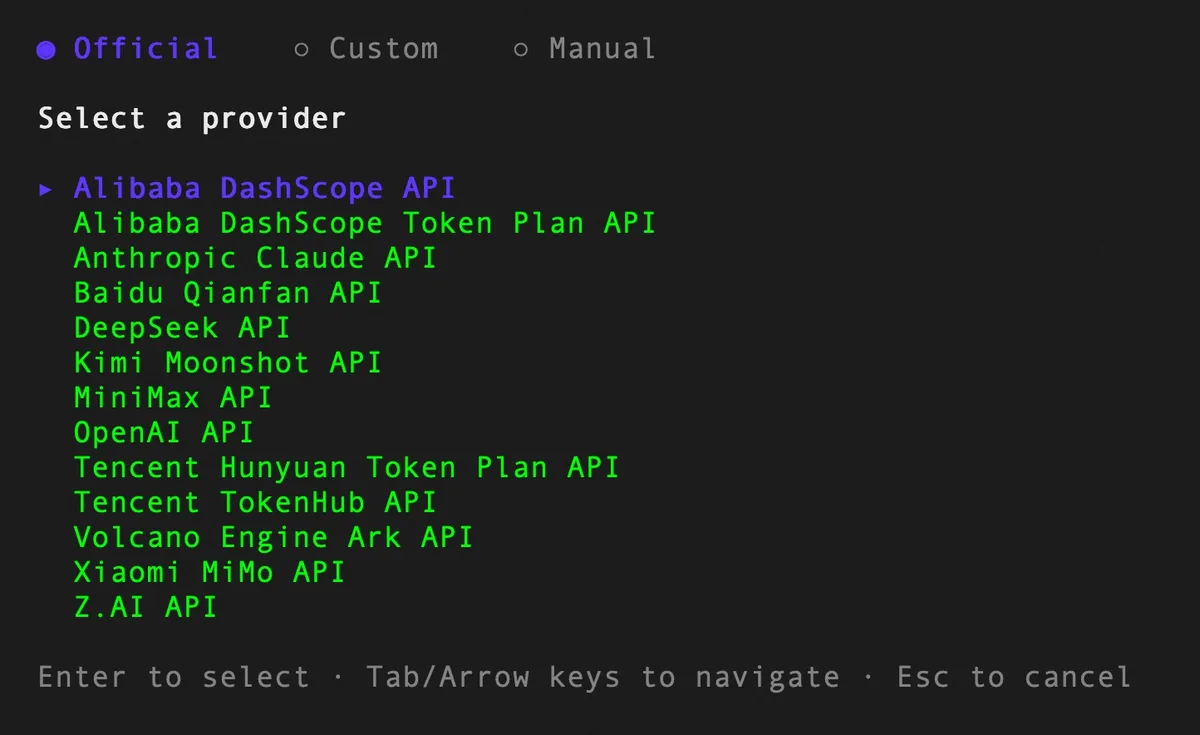
From a Git repository, run ocr review to inspect staged, unstaged, and untracked changes. You can also compare branches with ocr review --from main --to feature-branch, inspect one commit with ocr review --commit abc123, or audit a directory with ocr scan --path internal/agent. Start with a small change set so you can compare its findings with your own review before putting it into CI.
Best use cases
OpenCodeReview fits teams that want a consistent first review on every pull request, especially when human reviewers spend too much time on repetitive defects. It is also handy for auditing an unfamiliar repository, checking AI-generated code before commit, enforcing organization-specific rules, or adding a review step to a self-hosted development workflow.
It is less compelling if you only want autocomplete, need a completely managed service, or cannot send code to the model endpoint you plan to use. The CLI is open source, but your privacy boundary ultimately depends on where that model runs and what data it retains.
Pricing and license
OpenCodeReview is free to download and is licensed under Apache-2.0. There is no subscription attached to the CLI itself. You may still pay for LLM API calls, infrastructure, and the engineering time needed to tune rules and maintain integrations. Delegation mode can reuse an existing coding agent’s model access, while the normal mode uses the provider you configure.
My take
I like that OpenCodeReview does not pretend an LLM should make every decision. File coverage and comment placement benefit from boring, deterministic code; understanding a suspicious change benefits from an agent that can investigate. Splitting those responsibilities gives the project a clearer reason to exist than simply wrapping a model in another CLI.
The practical caveat is the same as with any automated reviewer: high-confidence output is not the same as complete coverage. The project’s own benchmark notes a precision-versus-recall trade-off, so human review and tests still matter. Used as a focused first pass rather than a replacement for engineering judgment, OpenCodeReview looks genuinely useful and is one of the more interesting AI coding projects trending today.